Map guide

Your Color Was Close. Your Shape Gave You Away.

Use wall art, frames, wallpaper, and furniture edges to practice clean painting and shape matching.

Best for

Painting practiceWall art hidesFrame matching

Quick map answer

What usually gets you caught: You pick a color too early and forget to ask whether your shape belongs there.

First move to try: Find a prop, edge, shadow, or repeated object before you start painting.

Why this map punishes players: This map punishes players who hide as a person first and paint second. Fix the outline before you fix the color.

Map overview

Use the numbered pins, then read the matching spot below.

The map image is only the overview. Each numbered pin links to the full spot guide section underneath, where the left image and right strategy describe the same spot.

Spot-by-spot guide

Every Mansion Gallery spot in one reading flow.

Read one spot at a time. On desktop, each spot pairs the image on the left with the matching strategy on the right. On mobile, the same block stacks vertically.

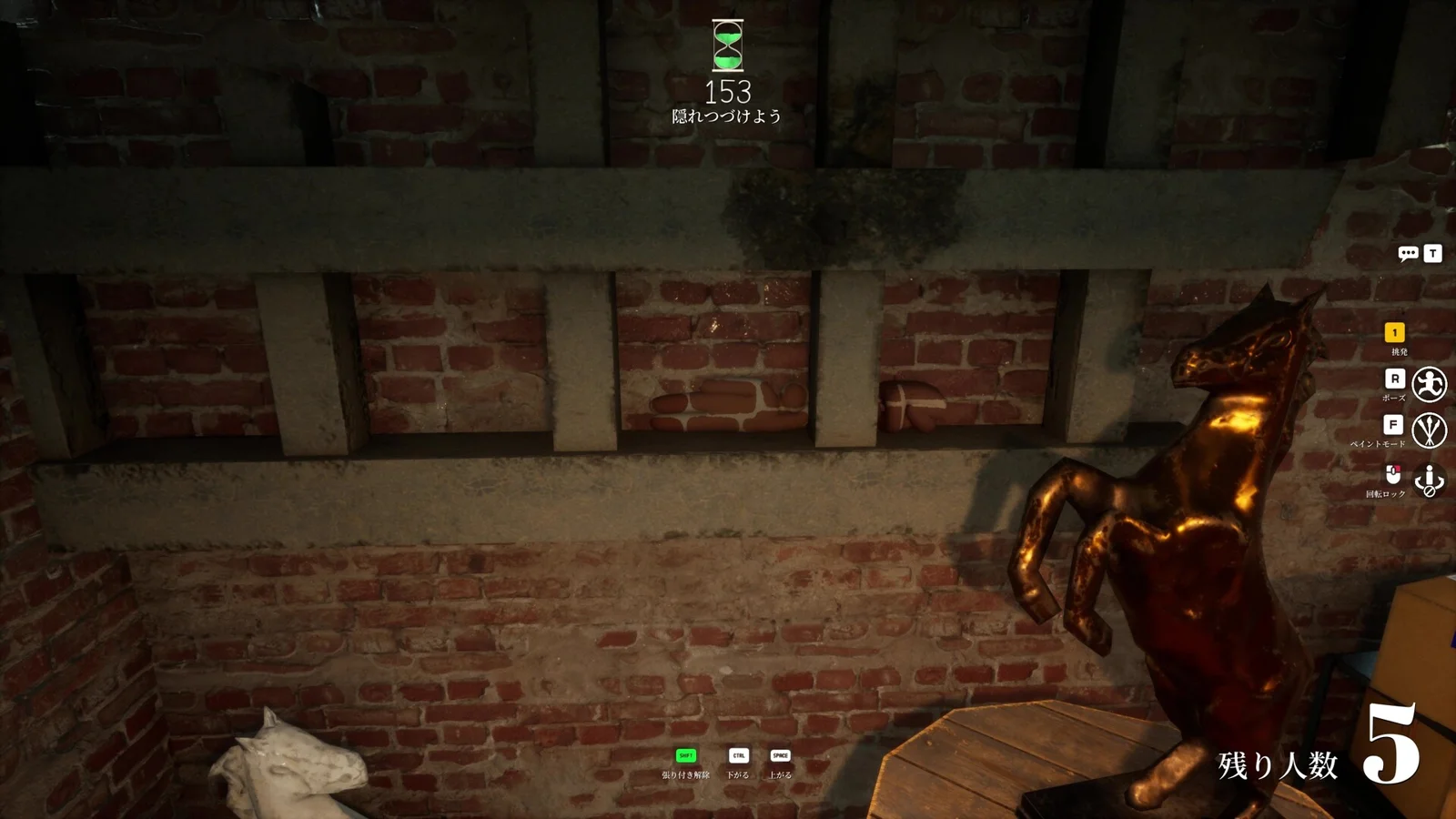
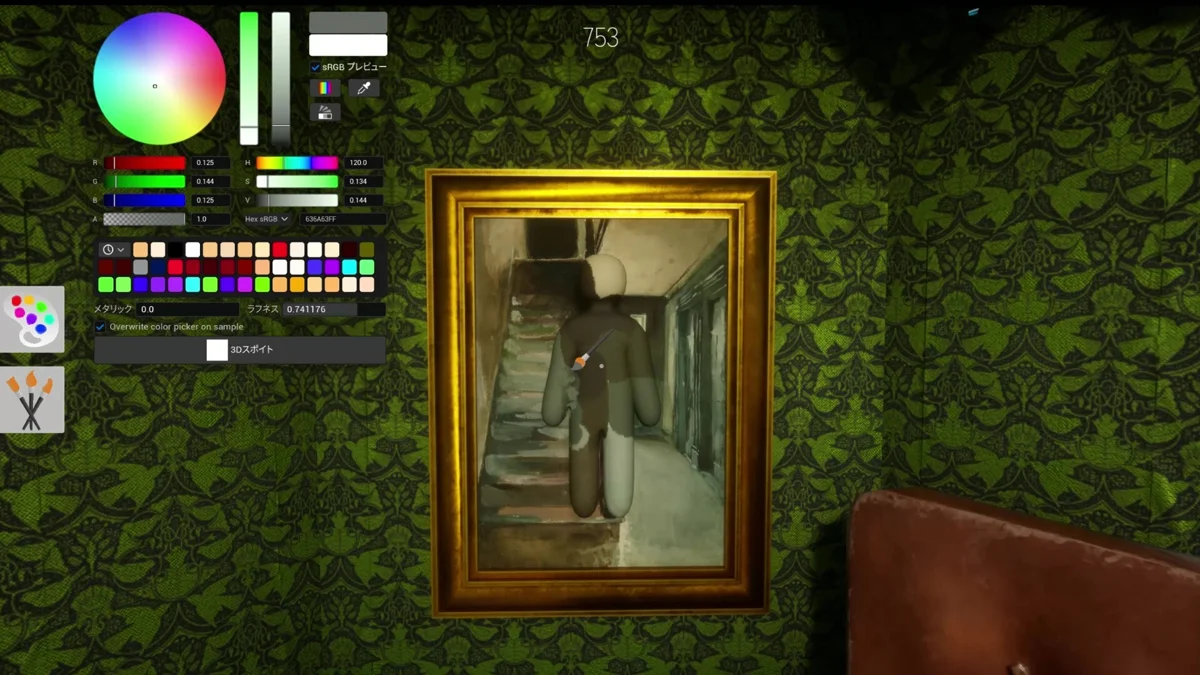
Frame Body Match hiding example1

Spot 1

Frame Body Match

HiderMedium5-7 playersWall Color

Frames and wall art already contain rectangular shapes, so a still body can disappear if the edges line up.

Paint recipe

Main: Wallpaper base

Second: Frame brown

Match the wall first, then add one frame-colored side.

Pose tip: Flatten against the wall and keep limbs inside the imaginary frame.

Hider plan

  1. Choose a frame wider than your body.
  2. Sample wallpaper base color.
  3. Paint one side as the frame edge.
  4. Stop moving before the door opens.

Seeker counter

  • Check frames that look too thick.
  • Look for human height symmetry.
  • Sweep wall art from side angles.

Common fail: A perfect color match still fails if your shoulder breaks the rectangle.

Clip idea: Reveal the hider by rotating the camera sideways.
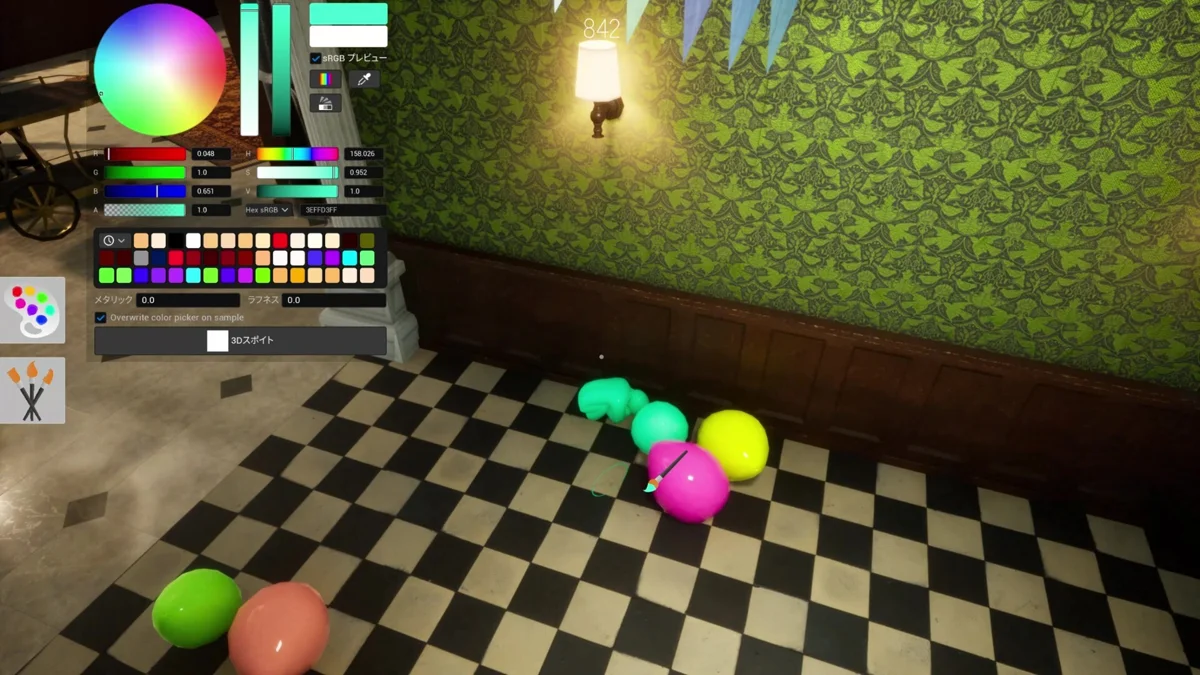
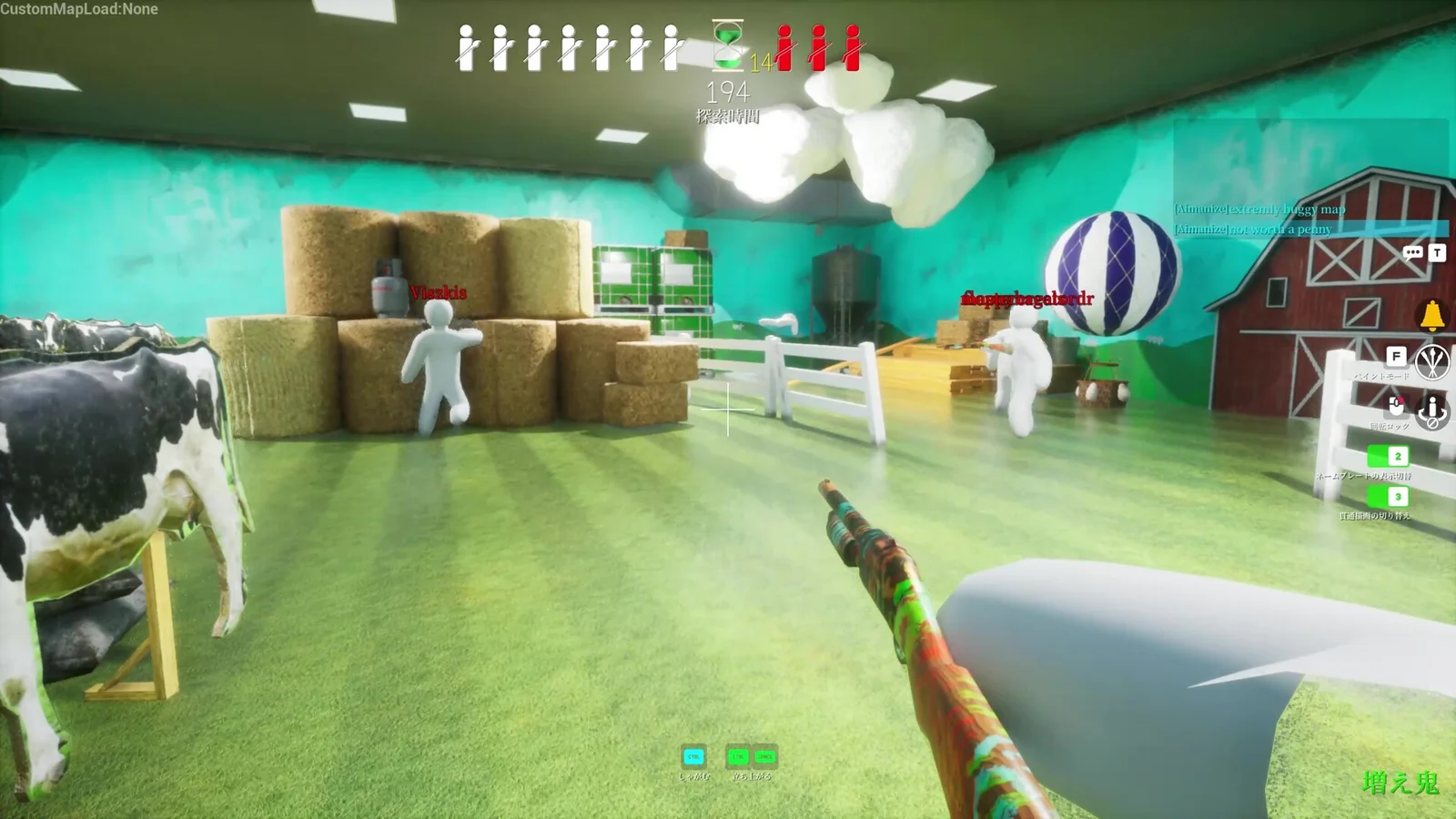
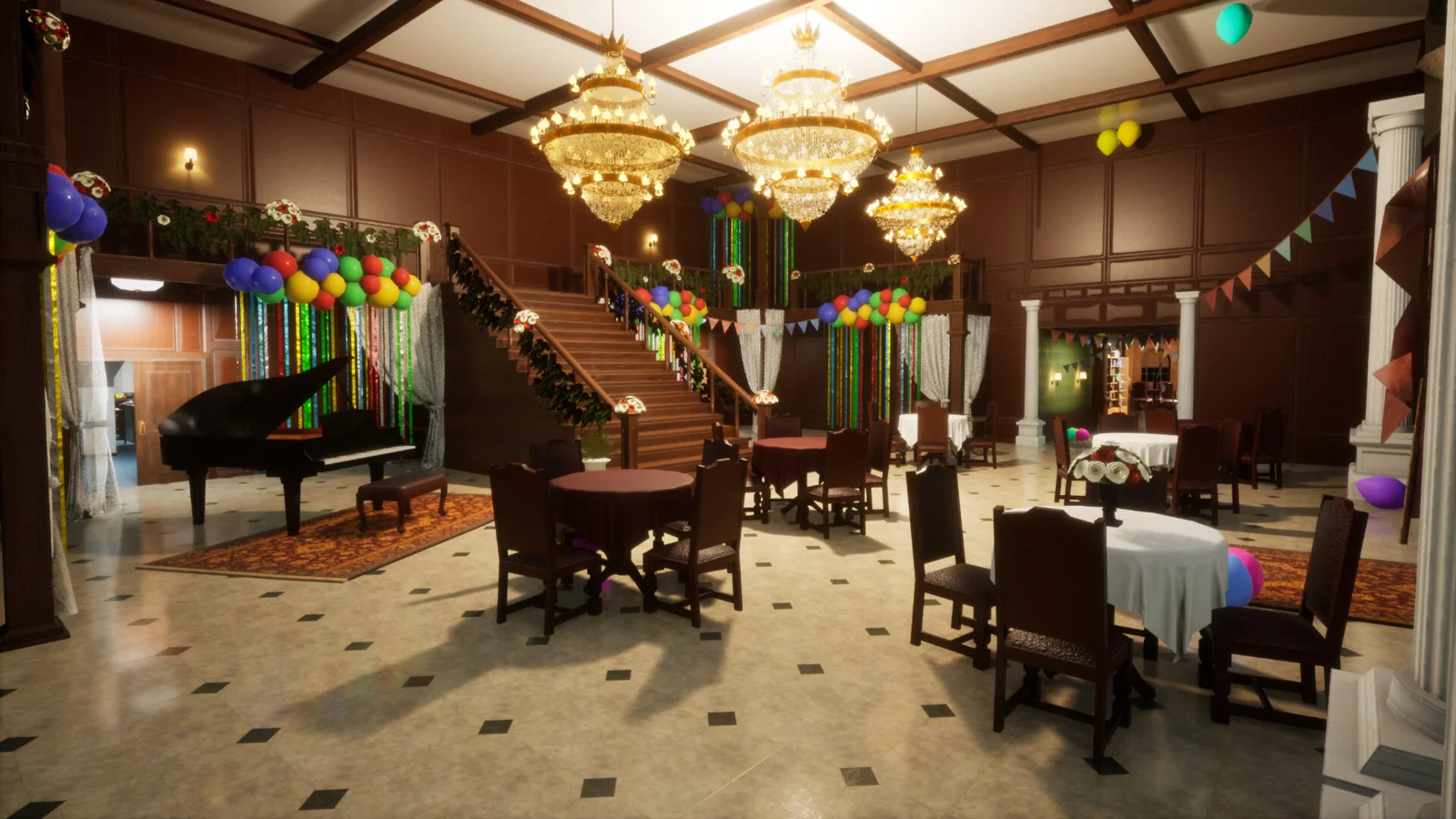
Balloon Floor Blend hiding example2

Spot 2

Balloon Floor Blend

HiderHard8-10 playersTexture Match

The green wall, black-and-white floor, and bright balloons make a noisy transition zone. A body can survive there if it borrows one large color and lets the props explain the rest.

Paint recipe

Main: Green wall base

Second: Balloon highlight

Shadow: Floor contact shade

Use one sampled wall color, then one bright prop color only where the body touches the balloon cluster.

Pose tip: Stay low on the wall-floor seam and let the balloon cluster break the rounded body shape.

Hider plan

  1. Pick the floor edge beside an existing balloon group.
  2. Sample the green wallpaper base first.
  3. Add one bright balloon-colored patch only on the exposed side.
  4. Keep the pose compact and close to the floor.
  5. Freeze before the seeker enters from the hallway.

Seeker counter

  • Check noisy prop clusters, not only clean walls.
  • Look for one balloon color attached to a body-sized green shape.
  • Sweep from the side so the floor-contact shadow reveals thickness.

Common fail: Painting every balloon color turns the hide into a bright player-shaped pile.

Clip idea: Show the straight-on pass, then the low side angle that catches the floor edge.

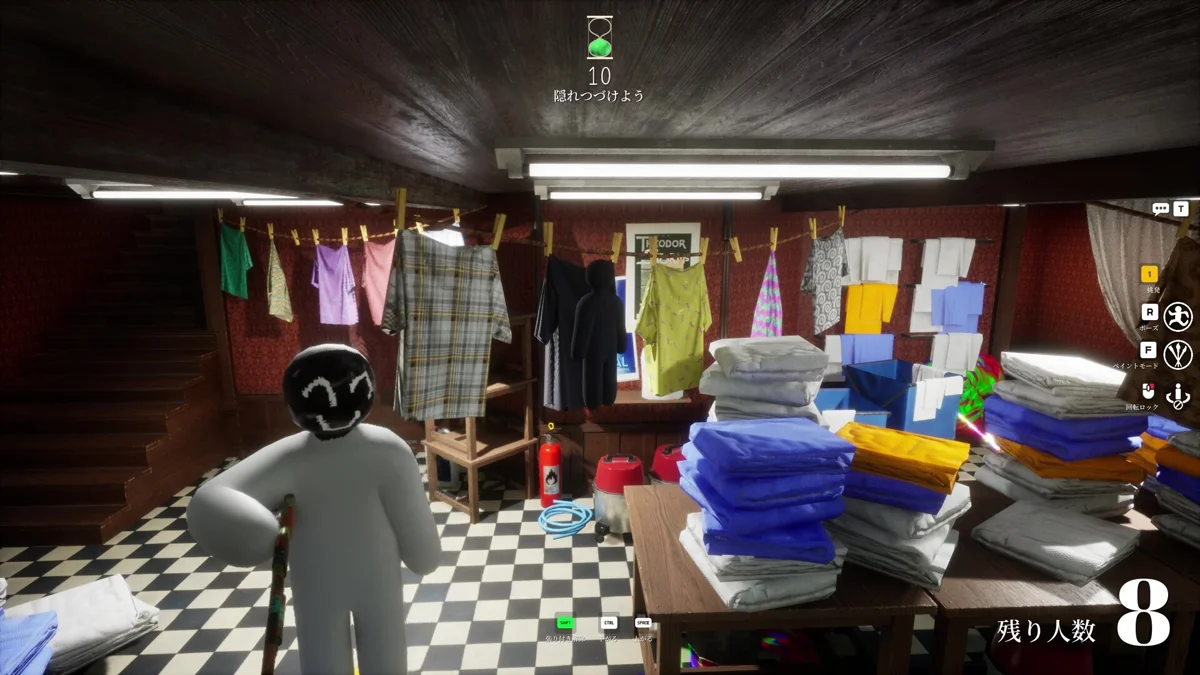
Laundry Line Shadow hiding example3

Spot 3

Laundry Line Shadow

HiderMedium5-7 playersProp Mimic

Hanging clothes already create vertical bodies, dark gaps, and uneven fabric edges. A narrow hider can borrow that clutter instead of trying to become a perfect wall.

Paint recipe

Main: Dark cloth shadow

Second: Muted fabric edge

Match the darkest garment first, then add one fabric-color edge only if it touches the rack.

Pose tip: Stand narrow beside a hanging garment and keep arms parallel to the cloth strips.

Hider plan

  1. Choose the darkest clothes rack instead of the brightest shirt.
  2. Sample the shadow between garments.
  3. Paint the whole body dark before adding fabric detail.
  4. Align shoulders with the hanging cloth edge.
  5. Stop moving before the seeker crosses the laundry room doorway.

Seeker counter

  • Do not clear clothing racks from the front only.
  • Check whether one hanging shape has legs or a head curve.
  • Move sideways to separate real cloth from a standing body.

Common fail: Standing too far from the clothes turns the body into a separate silhouette.

Clip idea: Cut from the clothes rack to a side-angle reveal.

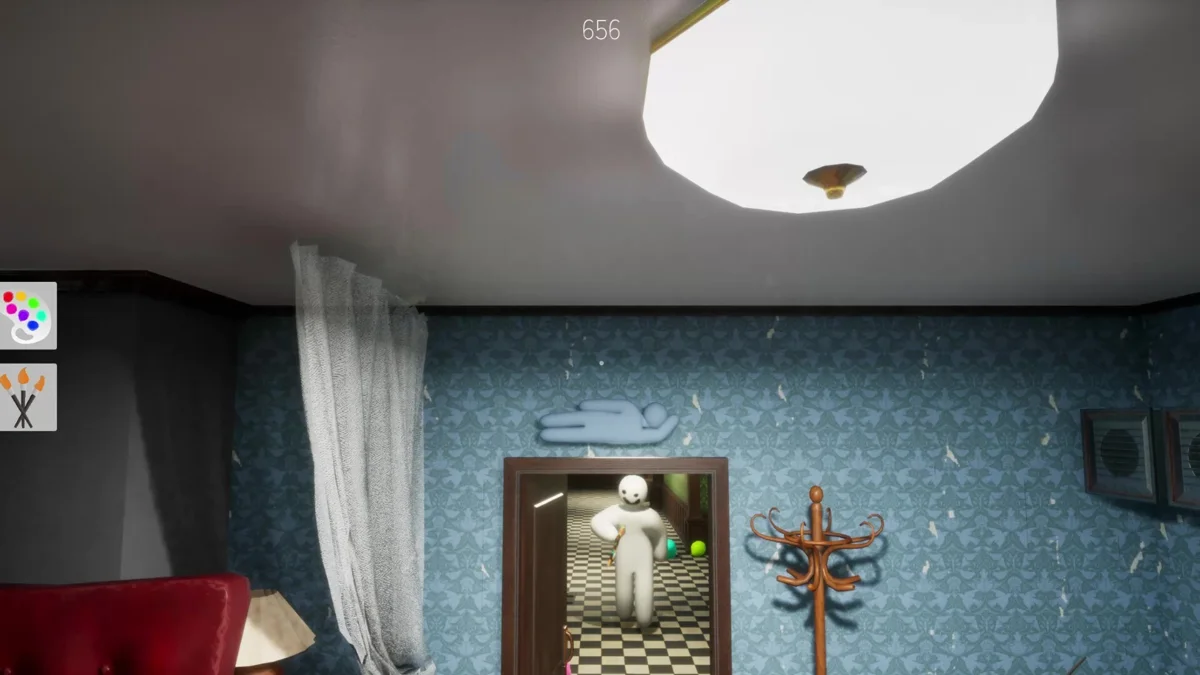
Door Header Flat Hide hiding example4

Spot 4

Door Header Flat Hide

BothHardAnyVertical Check

Seekers entering through a doorway usually look forward and down. A flat body above the door survives because it sits outside the first scan lane.

Paint recipe

Main: Blue wallpaper

Second: Ceiling gray

Shadow: Doorframe shade

Split the body between wall and ceiling tones so the lower edge does not float.

Pose tip: Flatten above the door and keep limbs parallel to the trim line.

Hider plan

  1. Use a doorway with busy wallpaper and a strong top trim.
  2. Sample the wall color for the lower half.
  3. Use ceiling gray only on the top-facing edge.
  4. Keep every limb above the doorway line.
  5. Stay still until the seeker has fully entered the room.

Seeker counter

  • Every doorway gets one upward glance before you leave the room.
  • Check trim lines for one soft body curve.
  • If one hider remains, revisit doors from inside the room and look back up.

Common fail: Leaving the lower body below the lintel makes a clear floating shape.

Clip idea: Show the seeker walking under the door, then pan up for the reveal.

Common pattern

What most players miss on this map.

Frame Body Match

Common fail: A perfect color match still fails if your shoulder breaks the rectangle.

Balloon Floor Blend

Common fail: Painting every balloon color turns the hide into a bright player-shaped pile.

Laundry Line Shadow

Common fail: Standing too far from the clothes turns the body into a separate silhouette.