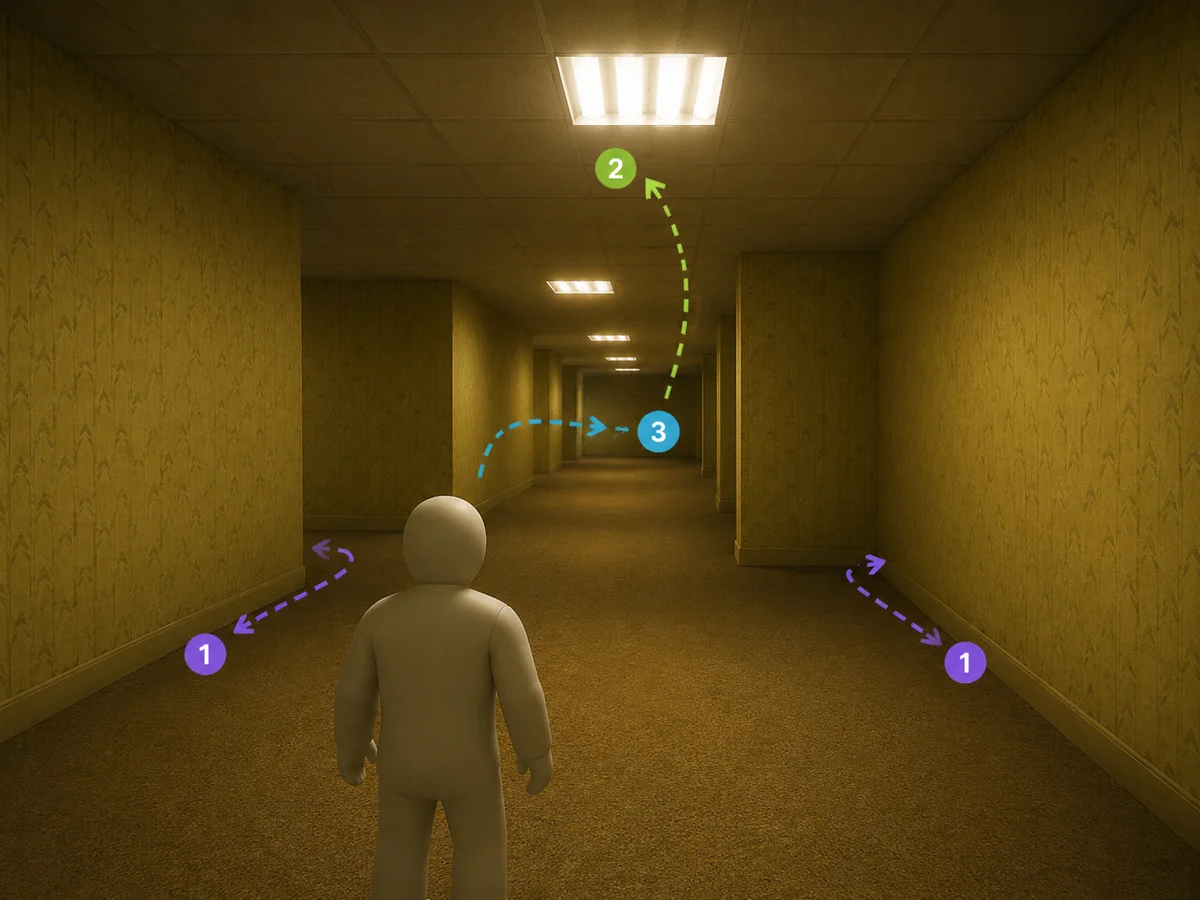
Seeker route

You Walked Past the Hider. Here's Where to Check First.

Good seekers don't scan randomly. They clear repeated props, broken shapes, low corners, and vertical spots before the timer turns into panic.

  • Check silhouettes before colors.
  • Clear repeated props first.
  • Look high only after the room looks too normal.

Five-check seeker route

  1. 01Clear repeated props first.
  2. 02Compare silhouettes before colors.
  3. 03Check low corners after the first sweep.
  4. 04Look up for vertical checks before the timer panic.
  5. 05Tag only after the outline makes sense.

Counter cards

Check these before the timer wins.

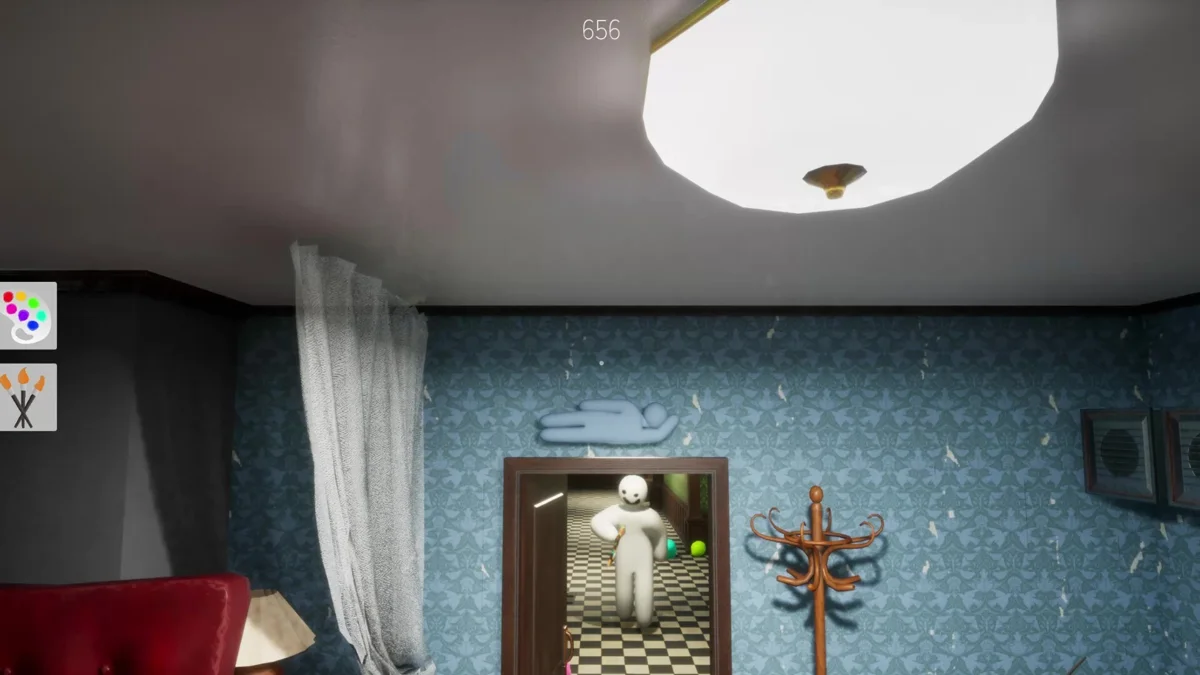
Door Header Flat Hide hiding example1

Spot 1

Door Header Flat Hide

BothHardAnyVertical Check

Seekers entering through a doorway usually look forward and down. A flat body above the door survives because it sits outside the first scan lane.

Paint recipe

Main: Blue wallpaper

Second: Ceiling gray

Shadow: Doorframe shade

Split the body between wall and ceiling tones so the lower edge does not float.

Pose tip: Flatten above the door and keep limbs parallel to the trim line.

Hider plan

  1. Use a doorway with busy wallpaper and a strong top trim.
  2. Sample the wall color for the lower half.
  3. Use ceiling gray only on the top-facing edge.
  4. Keep every limb above the doorway line.
  5. Stay still until the seeker has fully entered the room.

Seeker counter

  • Every doorway gets one upward glance before you leave the room.
  • Check trim lines for one soft body curve.
  • If one hider remains, revisit doors from inside the room and look back up.

Common fail: Leaving the lower body below the lintel makes a clear floating shape.

Clip idea: Show the seeker walking under the door, then pan up for the reveal.
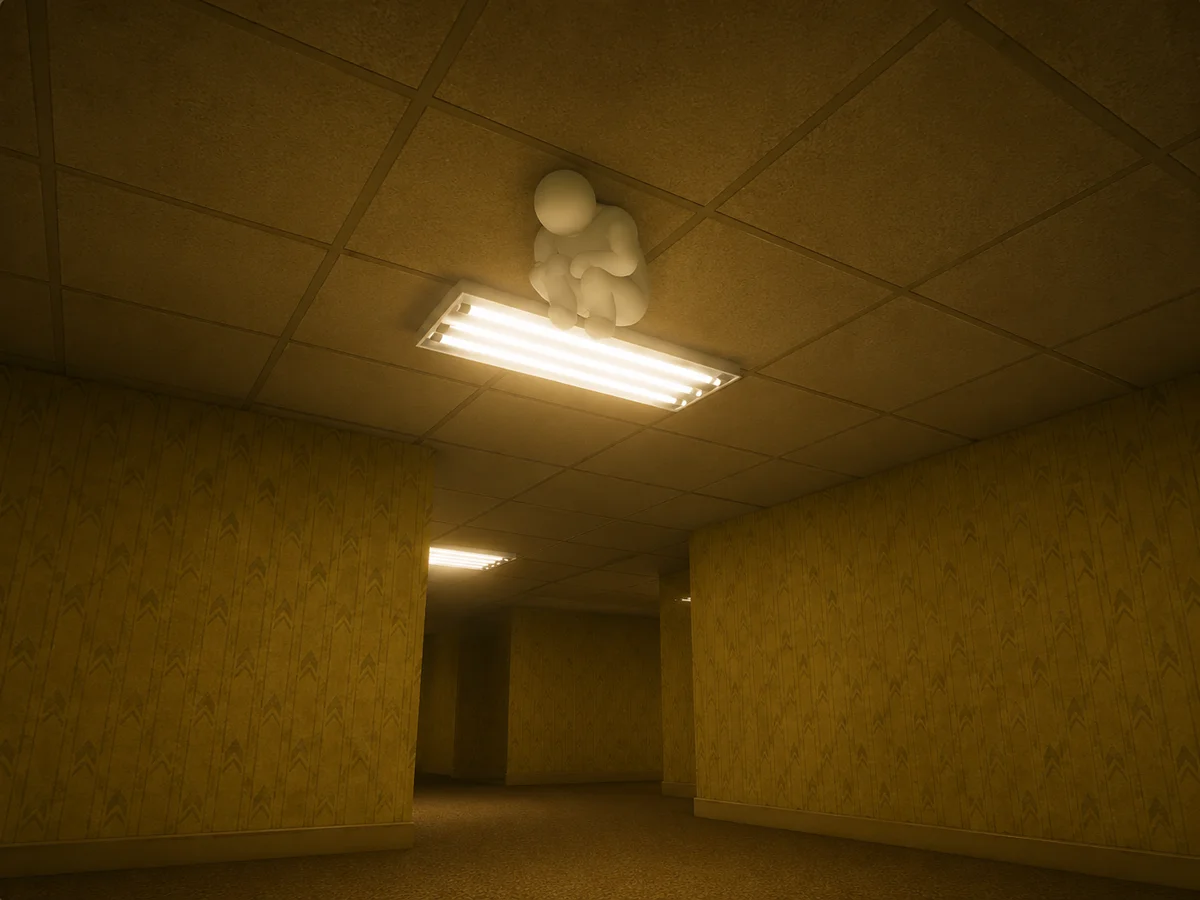
Ceiling Light Disguise hiding example2

Spot 2

Ceiling Light Disguise

BothHardAnyVertical Check

Most seekers clear the floor, walls, and prop edges first. A compact body against the light cluster stays outside their first scan pattern.

Paint recipe

Main: Warm white

Second: Soft yellow

Use one bright tone and avoid heavy shadow under the fixture.

Pose tip: Curl tight and keep every limb inside the light silhouette.

Hider plan

  1. Pick a ceiling light or high fixture with enough width to hide the torso.
  2. Sample the warm light color instead of the darker wall below it.
  3. Paint the body one bright tone.
  4. Compress the pose to reduce the outline.
  5. Stay fully attached to the light cluster.

Seeker counter

  • Spend the first half clearing low angles only once.
  • Use the second half of the round to run an explicit ceiling pass.
  • Pause at each light and check for one extra shape.

Common fail: Hiders hang below the light and create a floating body edge seekers can tag instantly.

Clip idea: Show a full floor sweep that misses the light until the final upward check.

Vertical Check Route hiding example3

Spot 3

Vertical Check Route

SeekerMediumAnySweep Route

Backrooms punishes seekers who move fast without a route. The winning pattern is low sweep first, vertical sweep second, repeat pass last.

No paint recipe needed. This is a route or seeker check.

Pose tip: Hiders should assume the second pass will finally include ceiling and sign checks.

Hider plan

  1. Do not rely on only one high hide once seekers begin vertical checks.
  2. Expect smart seekers to revisit lights and signs late.
  3. Avoid moving after the first seeker misses the spot.

Seeker counter

  • Clear low clutter and wall corners first.
  • Check lights, signs, and top edges in the middle phase.
  • Revisit 'already clear' spots if one hider remains.

Common fail: Seekers trust teammate callouts and never run the upward pass themselves.

Clip idea: Overlay the route order while a seeker clears low, then high, then repeats one suspect light.

Spot 4

Cow Standee Shoulder

BothHardAnyProp Mimic

Cow props reward shape mimicry. The black and white blocks distract seekers from the body outline.

Paint recipe

Main: Warm white

Second: Black patches

Use two large patches, not tiny details.

Pose tip: Hide hands and head edges against the cow curve.

Hider plan

  1. Stand near the cow prop edge.
  2. Paint white first.
  3. Add one or two black blocks.
  4. Match the curve instead of the exact texture.

Seeker counter

  • Do not only look for wrong colors.
  • Compare the curve against real cow props.
  • Check if a patch has a human shoulder line.

Common fail: Painting too many small spots makes the disguise look hand-made.

Clip idea: Cut from the cow prop to the reveal angle.

Spot 5

Fence Lane Sweep

SeekerEasyAnySweep Route

Bright lanes create strong silhouettes. A seeker can clear them quickly before checking deeper props.

No paint recipe needed. This is a route or seeker check.

Pose tip: Hiders should avoid standing parallel to the fence line.

Hider plan

  1. Do not freeze in the center lane.
  2. Use fence corners only if your outline is broken.
  3. Move before the seeker enters the lane.

Seeker counter

  • Sweep the lane from one end.
  • Compare repeated fence gaps.
  • Save deep prop checks for after the lane is clear.

Common fail: Hiders stand where the background is smaller than their body.

Clip idea: Show a fast seeker lane clear followed by a corner check.

Video evidence

Every check route now links to the clip behind it.

The BEST Hiding Spot in MECCHA CHAMELEON! by KYRSP33DY

Reference clip

The BEST Hiding Spot in MECCHA CHAMELEON!

Open source clip

Scheme card

Vertical Check

Traffic A

If the last hider is missing, the ceiling is part of the room scan.

Primary source: The BEST Hiding Spot in MECCHA CHAMELEON! / KYRSP33DY

What you see in the clip

The seeker clears every floor angle and still cannot find the last player. The difference is not speed. The difference is that nobody has looked up yet.

Systematic seeking means low first, then high, then repeat suspect areas. Panic movement only helps the hider.

Seeker Route

  1. First 50 percent: clear wall corners, furniture backs, shelf bottoms, and dark floor clutter.
  2. Middle 30 percent: run an explicit upward sweep on ceiling lights, top edges, signs, and high decorations.
  3. Final 20 percent: revisit the places that felt too obvious to hide in, because strong hiders abuse certainty.

Common Seeker Mistakes

  • Scanning only floor and corners guarantees you miss ceiling hides.
  • Moving faster causes more misses than moving slower with a fixed route.
  • Color alone is unreliable; the final clue is almost always silhouette or placement.
  • Never trust a teammate's 'already clear' call without one more pass.

Reference videos

The BEST Hiding Spot in MECCHA CHAMELEON! by KYRSP33DY

Reference clip

The BEST Hiding Spot in MECCHA CHAMELEON!

Open source clip

Backrooms reference

Ceiling Light Disguise

Traffic AHardVertical Hide

Backrooms / #3 Ceiling Light

Vertical hides win because seekers spend most of the round looking low.

Primary source: The BEST Hiding Spot in MECCHA CHAMELEON! / KYRSP33DY

What you see in the clip

KYRSP33DY's clip sells the whole joke: seekers clear the floor, panic as time drops, and nobody looks at the ceiling light until it is too late.

High hides are not random. They work because most seekers delay upward checks until the end of the round.

Copy Plan

  1. Use a ceiling light or a high wall decoration as the target object.
  2. Sample the light color, usually bright white or warm yellow, and keep the body mostly one tone.
  3. Avoid heavy shadow work under the light because that creates a fake floating body.
  4. Use the most compact pose available so the outline becomes as small as possible.
  5. Stay tight to the ceiling or fixture. Hanging below the object ruins the trick.

Seeker Counter

  1. Use the first half of the round to clear low corners, floor props, and furniture backs.
  2. Use the second half of the round to look up on purpose. That is what separates experienced seekers from panicked ones.
  3. Pause for one second at each ceiling light and decoration cluster and check for a wrong shape.

Reference videos