
If you're hiding
- Find a background bigger than your body.
- Sample the color behind your final pose.
- Stop moving before the seeker enters the room.
Hider plan
Most hiders lose because they only match color. This page teaches you how to hide your outline, pose earlier, and stop looking like a player-shaped mistake.
Copyable hides
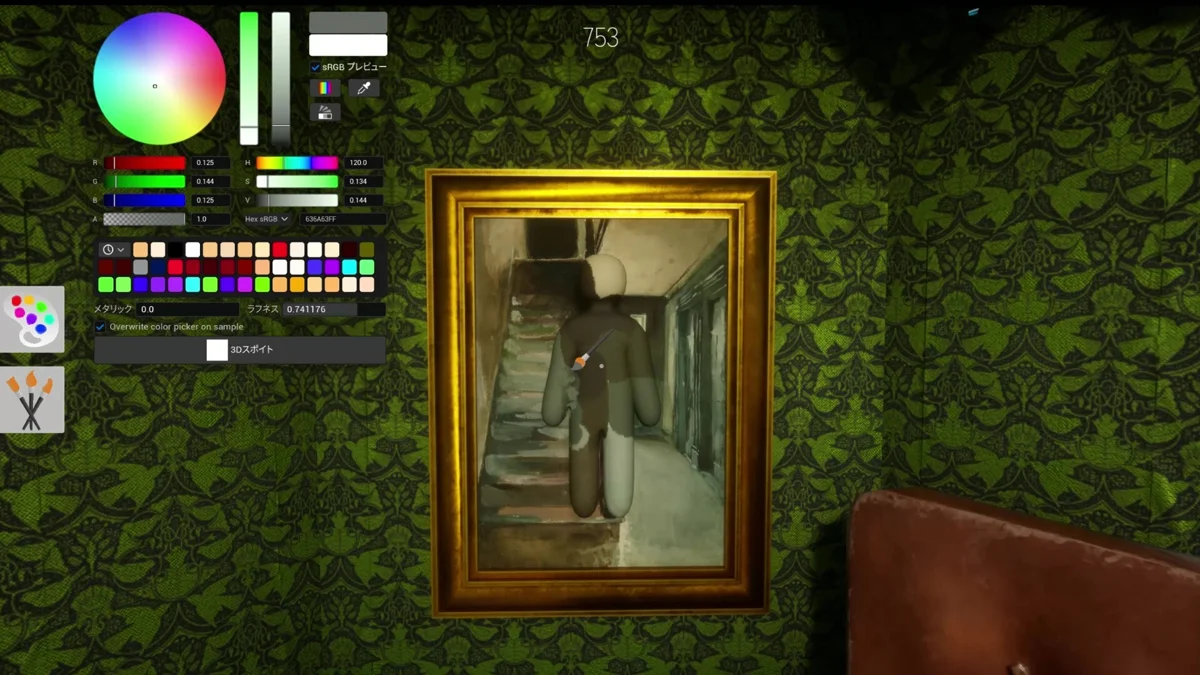 1
1Spot 1
Frames and wall art already contain rectangular shapes, so a still body can disappear if the edges line up.
Main: Wallpaper base
Second: Frame brown
Match the wall first, then add one frame-colored side.
Pose tip: Flatten against the wall and keep limbs inside the imaginary frame.
Common fail: A perfect color match still fails if your shoulder breaks the rectangle.
Clip idea: Reveal the hider by rotating the camera sideways.
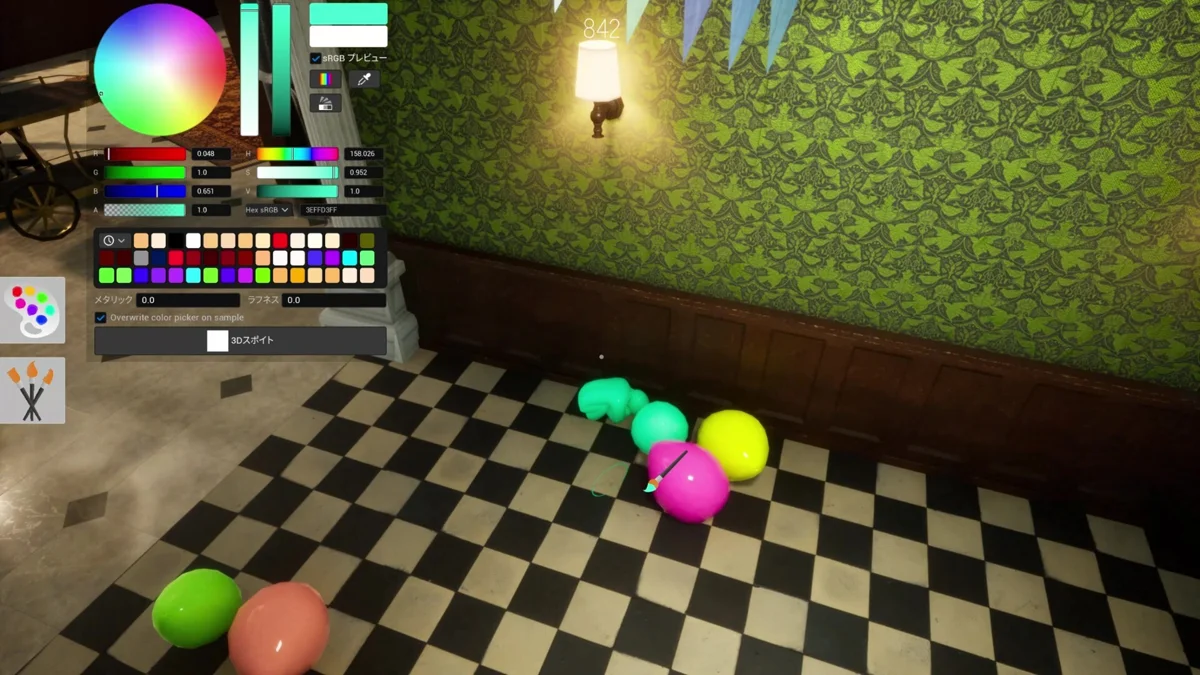 2
2Spot 2
The green wall, black-and-white floor, and bright balloons make a noisy transition zone. A body can survive there if it borrows one large color and lets the props explain the rest.
Main: Green wall base
Second: Balloon highlight
Shadow: Floor contact shade
Use one sampled wall color, then one bright prop color only where the body touches the balloon cluster.
Pose tip: Stay low on the wall-floor seam and let the balloon cluster break the rounded body shape.
Common fail: Painting every balloon color turns the hide into a bright player-shaped pile.
Clip idea: Show the straight-on pass, then the low side angle that catches the floor edge.
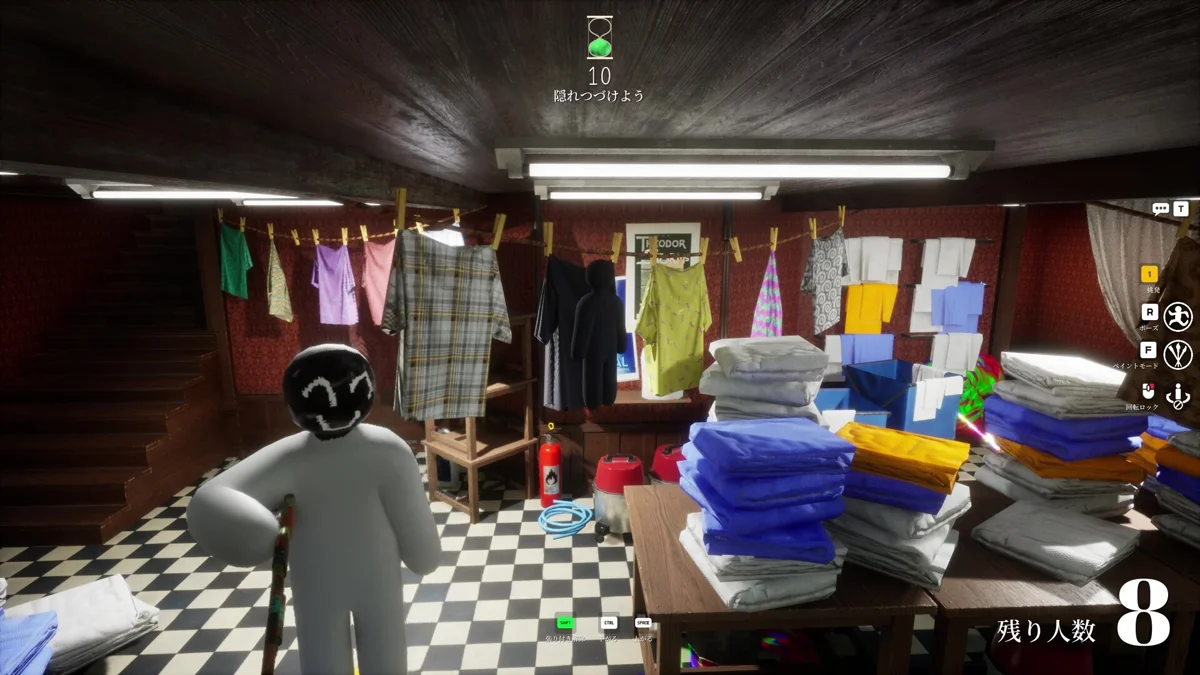 3
3Spot 3
Hanging clothes already create vertical bodies, dark gaps, and uneven fabric edges. A narrow hider can borrow that clutter instead of trying to become a perfect wall.
Main: Dark cloth shadow
Second: Muted fabric edge
Match the darkest garment first, then add one fabric-color edge only if it touches the rack.
Pose tip: Stand narrow beside a hanging garment and keep arms parallel to the cloth strips.
Common fail: Standing too far from the clothes turns the body into a separate silhouette.
Clip idea: Cut from the clothes rack to a side-angle reveal.
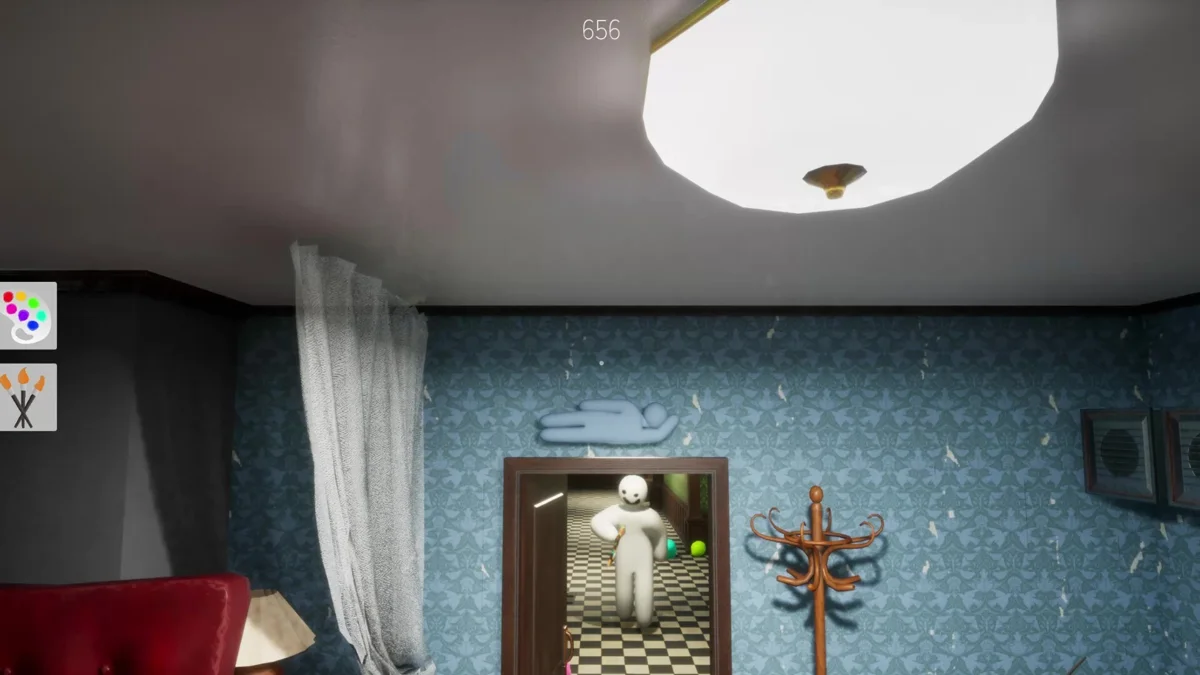 4
4Spot 4
Seekers entering through a doorway usually look forward and down. A flat body above the door survives because it sits outside the first scan lane.
Main: Blue wallpaper
Second: Ceiling gray
Shadow: Doorframe shade
Split the body between wall and ceiling tones so the lower edge does not float.
Pose tip: Flatten above the door and keep limbs parallel to the trim line.
Common fail: Leaving the lower body below the lintel makes a clear floating shape.
Clip idea: Show the seeker walking under the door, then pan up for the reveal.
Clip breakdown

Scheme card
This game is not about hiding behind things. It is about becoming part of the room.
Primary source: Prop Hunt But With Paint / SMii7Y
In SMii7Y's clip, the hider paints into the kitchen wall. The seeker stares at the wall for a few seconds, then walks away because the body stops reading as a person.
Seekers are searching for a human outline first. If the outline breaks, imperfect color often survives.
Mansion Gallery reference
The frame gives you a rectangle. Your body only has to stop breaking it.
Primary source: MASTERFUL HIDING SPOTS - MECCHA CHAMELEON / CheesyBeeps
The Mansion screenshot shows a hider painting into a gold-framed wall picture. The useful lesson is the border: the frame hides bad edges better than an open wall does.
Mansion Gallery hides work when you borrow existing borders: frames, door trim, clothes racks, and wallpaper seams.

Scheme card
The best spot matters before the paint job does.
Primary source: Hiding in the Most OP SPOTS in Meccha Chameleon / Caylus
Caylus does not start rounds by painting at random. He runs straight to specific map positions because a strong spot can carry a rough disguise.
A winning hide usually begins with three things: a big background, an easy color sample, and a pose that breaks the human outline.

Scheme card
Better hiding is the product of color transition, lighting, prop shape, position, and sightline.
Primary source: MECCHA CHAMELEON - 10 Advanced Tips You NEED to Know / Game Launch Central
The advanced guide video turns strong hides into repeatable systems: not just what color to paint, but where to stand, how to split light, and how to test the hide from seeker view.
High-level disguise works when each decision has a visible reason in the room and a visible proof in the clip.

Scheme card
Most fast deaths are not bad luck. They are repeated, visible mistakes.
Primary source: The WORST Hiding Spots In Meccha Chameleon / sennyk4 Shorts
Across the three shorts, the same problems keep showing up: middle-of-room hides, messy paint, exposed body gaps, and players still adjusting when seekers arrive.
The opposite of every failed hide is the Stop Looking Human rule: simple paint, bigger background, broken silhouette, full stop before contact.